1. Standard Tamil Keyboard Layout
High resolution image suitable for printing.
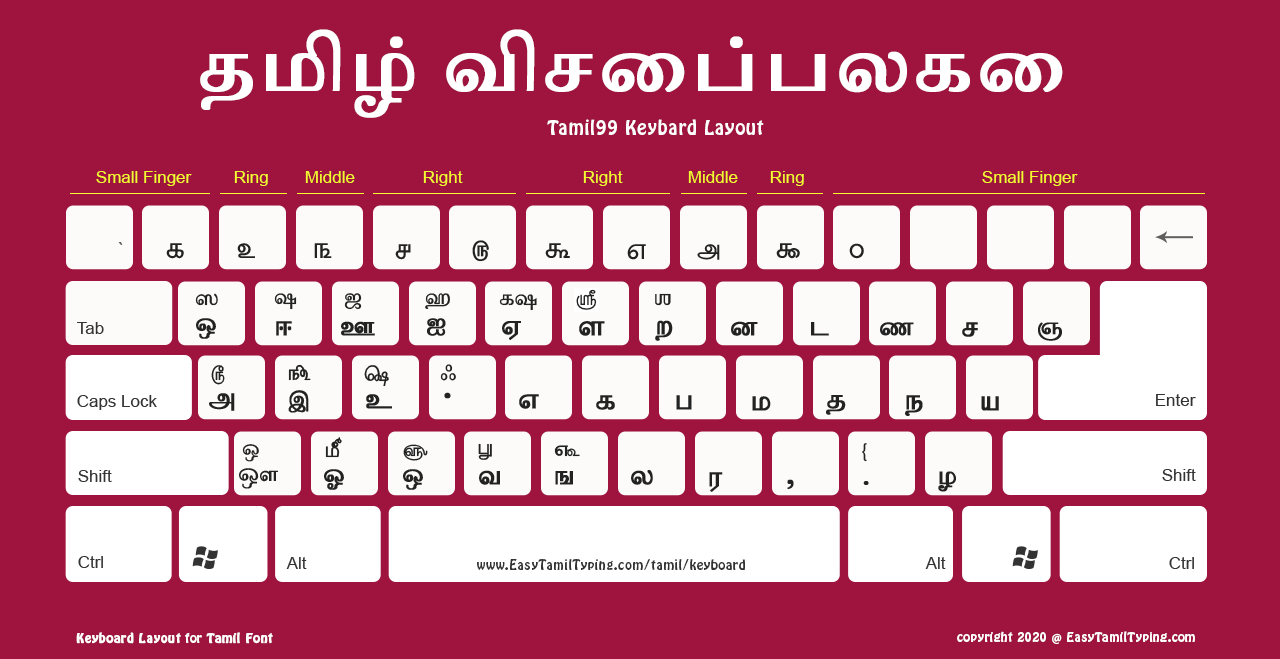
We have five different Tamil keyboard layouts for you to download on your computer. Once downloaded — you can use it as a reference to type in Tamil either on Word document or any other text editor. You also need to download the matching Tamil fonts.
High resolution image suitable for printing.
High resolution image suitable for printing.
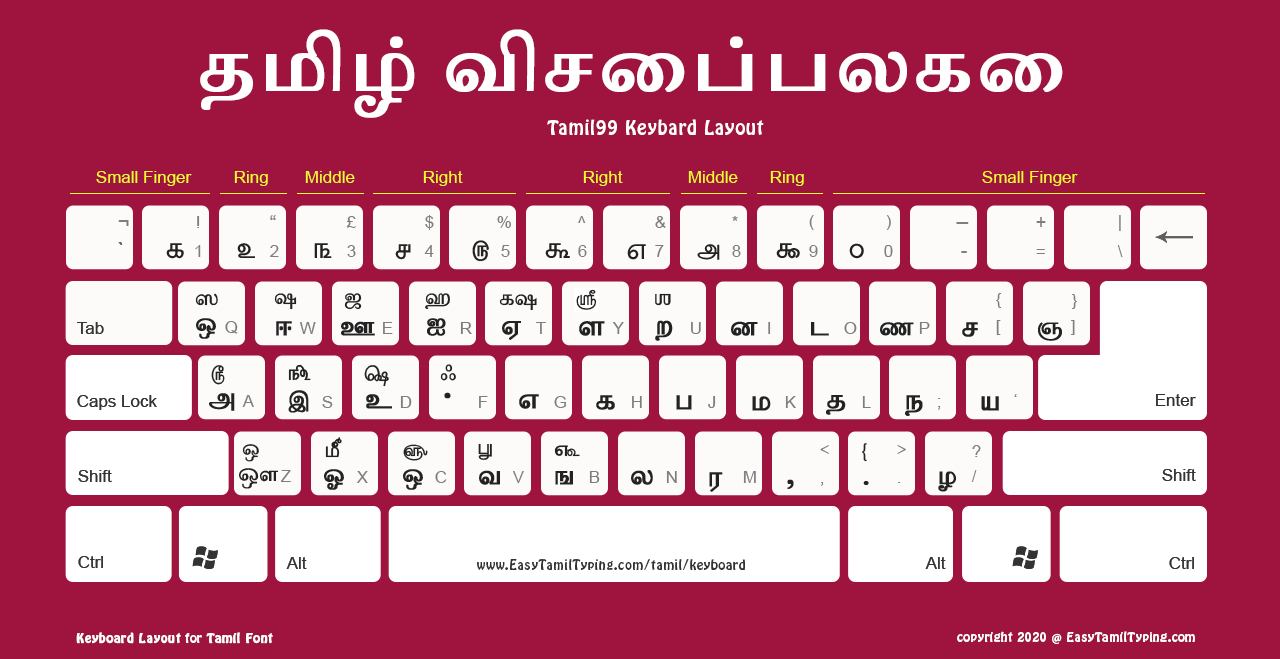
High resolution image suitable for printing.
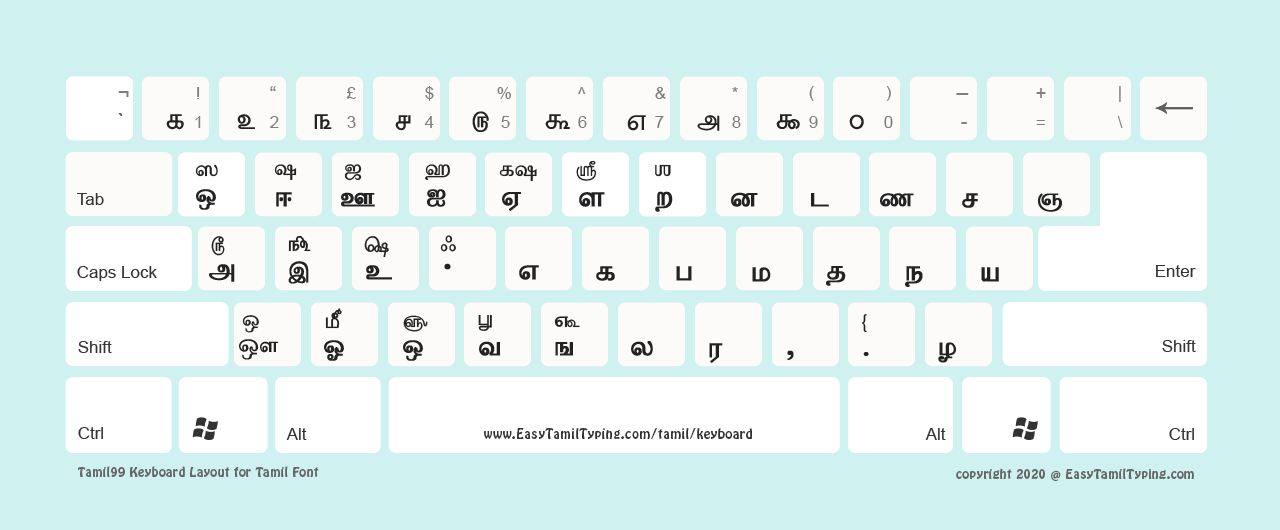
High resolution image suitable for printing.
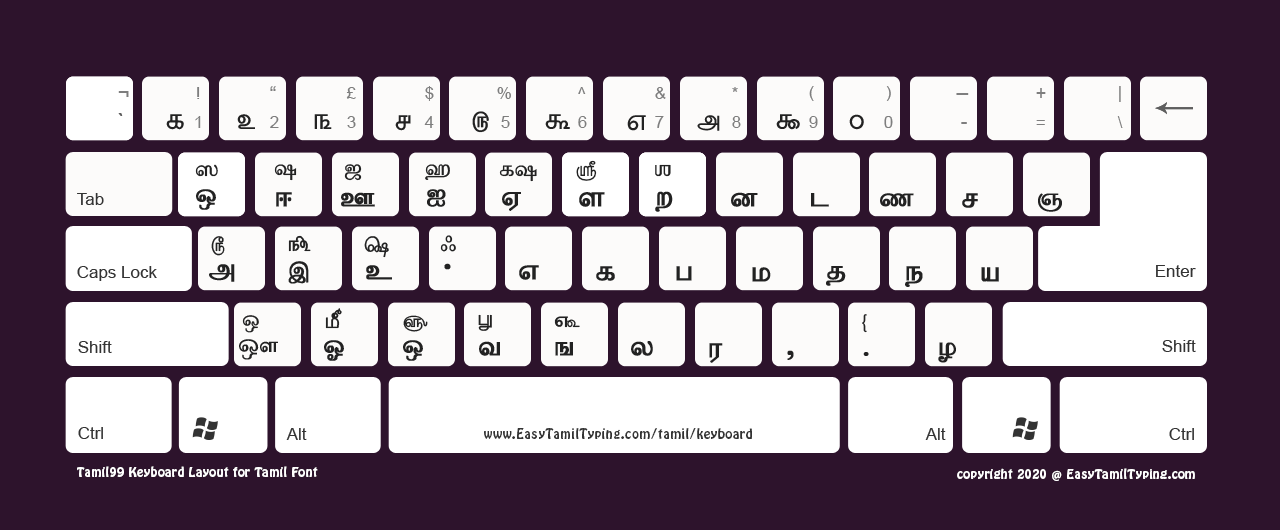
High resolution image suitable for printing.
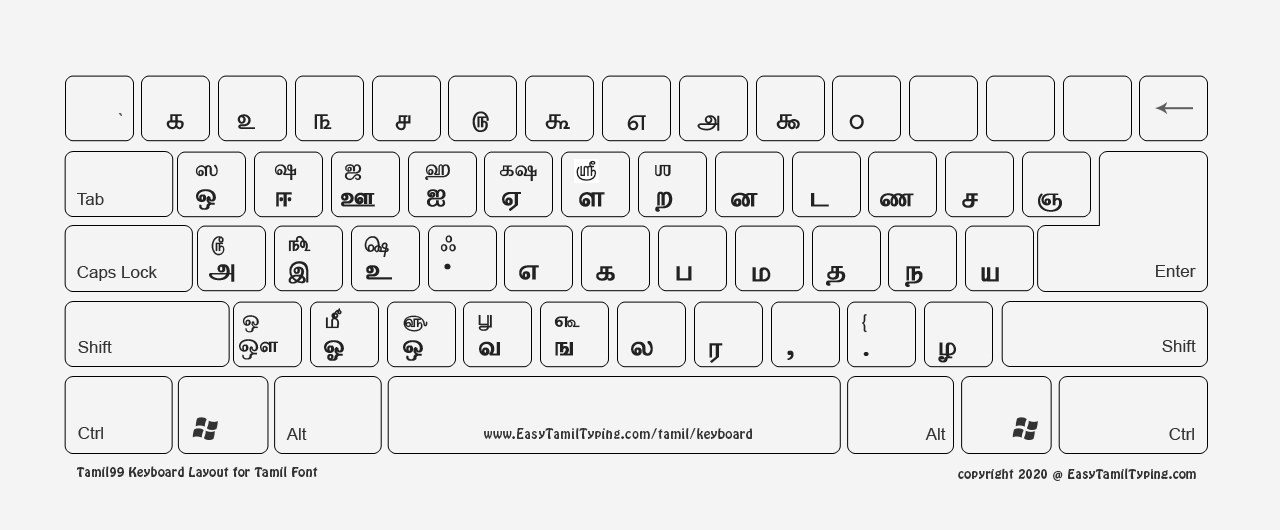
Here's our systematic approach to setting up Tamil typing.
Acquire your Tamil font — browse our curated fonts library and install the ideal typeface for your Tamil writing needs.
Obtain your keyboard reference using this reliable download process:
Click on your preferred keyboard layout from our collection
Right-click when the high-resolution image appears
Choose "Save image as..." and save to your preferred location
Establish your typing environment by opening any word processor and selecting the Tamil font you installed earlier.
Launch your Tamil writing session! Position your keyboard image for easy viewing while you compose beautiful Tamil text.
Expert recommendation: Limited screen space? Our keyboards deliver outstanding print clarity — print one for a reliable desktop reference that's always ready when you need it!
Designed for Tamil99 keyboard layout — accurately mapped to provide an authentic Tamil typing experience with correct character placement.
Meets professional standards — designed for typists, and businesses requiring error-free Tamil documentation.
Supports various display formats — perfect for presentations, reference guides, digital displays, and high-quality printing.
Offers unrestricted licensing — use freely for academic research, commercial projects, educational materials, or personal correspondence.
If you frequently need to boot from USB, check if your PC supports a boot menu key (often F12). Press it during startup to select a device for that session only—no Windows or BIOS changes required.
Here’s a detailed write-up on changing the boot order from within Windows, including the necessary context, methods, and important limitations. Introduction
However, there are scenarios—such as preparing to boot from a USB installer or troubleshooting a dual-boot system—where you might want to change the boot order without rebooting and mashing a function key. The good news: ⚠ Key Limitation: Windows cannot permanently rearrange the physical boot priority list stored in your motherboard’s firmware (BIOS/UEFI) for all devices (e.g., making USB always boot before SSD). That requires entering BIOS. But Windows can trigger a one-time boot from another device or manage the boot manager for installed operating systems. Here’s what you can actually do from within Windows: Method 1: One-Time Boot via Windows Recovery (UEFI Systems Only) If your PC uses modern UEFI (instead of legacy BIOS), you can instruct the firmware to boot from a specific device just once without changing the permanent order.
The boot order determines which device (hard drive, SSD, USB drive, DVD, etc.) your computer loads the operating system from first. Traditionally, changing the boot order requires entering the BIOS/UEFI firmware settings by pressing a key (like F2, Del, or Esc) during startup.
Not all motherboards support this. It works best on Surface devices and some modern OEM PCs.
 Sambhu Raj Singh ·