Day Dvd Archive: Dora The Explorer Save The
Top DVD burning software
Super-intuitive user interface
BDXL 100GB and M-Disc support
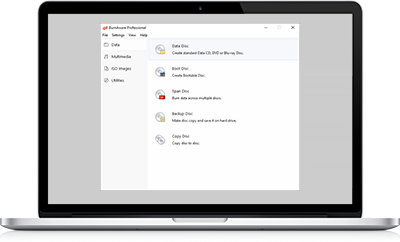
BurnAware is a free CD, DVD, Blu-ray Disc and ISO burning software that allows you to create and burn all disc types, including M-Disc and BDXL (100 GB). Home users can easily create bootable discs, multisession discs, high-quality audio CDs, and video DVDs/BDMVs, as well as create and burn ISO images. Power users will appreciate BurnAware's advanced features, such as audio CD-Text editing, data recovery, disc spanning, and disc copying.
Released January 19, 2026
Why is this essay helpful? Because it serves as a call to action. Physical DVDs are subject to disc rot, scratches, and obsolescence of hardware. Many libraries have purged their children’s DVD sections. Streaming services, when they carry Dora , often rotate episodes, remove original music licenses, or present cropped versions. The Save the Day compilation may never appear on a streaming platform in its original form. Therefore, the archivist’s work—ripping the disc (for personal preservation under fair use), cataloging its metadata (UPC, release date, run time), and sharing its cultural significance—is essential. A “helpful essay” on this topic encourages the reader to see not a dusty old DVD, but a time capsule.
In the landscape of early 2000s children’s television, few figures are as iconic as Dora Márquez. With her map, her backpack, and her ever-present cousin Diego, she taught a generation of preschoolers basic Spanish, problem-solving, and the rhythm of interactive television. Among the many DVD releases from the franchise, Dora the Explorer: Save the Day (Paramount Home Entertainment, 2003) holds a peculiar, valuable place. At first glance, it is a simple compilation of episodes—including “Three Kings Day,” “The Super Silly Fiesta,” and “The Lost City.” However, for the media archivist, the cultural historian, and the nostalgic adult, this plastic disc is not mere entertainment; it is a primary source document. This essay argues that the Save the Day DVD is a crucial artifact for understanding early digital distribution, the evolution of interactive pedagogy, and the preservation of a pre-streaming media ritual. dora the explorer save the day dvd archive
Dora the Explorer: Save the Day is not just a tool for entertaining a toddler on a rainy afternoon. It is a document of early 2000s home media logistics, a record of interactive pedagogical techniques, and a narrative artifact of pre-digital heroism. To archive it is to resist the flattening effect of streaming, where all content becomes equally present and equally forgettable. By treating this DVD with the seriousness of a historical source, we ensure that future researchers—and future nostalgic adults—can understand how a little girl with a purple backpack taught millions to say “¡Lo hicimos!” (We did it!). And that, truly, saves the day. Why is this essay helpful
To archive Save the Day is to capture a specific technological and economic moment. In 2003, DVDs were transitioning from a luxury to a household staple, but they had not yet become the disposable coasters of the streaming age. The DVD itself—with its “Nick Jr.” branding, its simple animated menus, and its lack of “skip intro” button—represents a user experience designed for a young child and a patient parent. Unlike streaming, where content is ephemeral and algorithmically served, the DVD is fixed. The episode order, the bonus features (often a “Nick Jr. Baby” promo or a music video), and even the FBI anti-piracy warning are all intentional data points. For the archivist, a complete preservation includes not just the video files, but the disc art, the insert booklet, and the physical case. These elements tell us how media was marketed, consumed, and valued. Many libraries have purged their children’s DVD sections
Thematically, Save the Day compiles episodes centered on altruistic action and community problem-solving. Unlike modern shows that may focus on emotional regulation or STEM skills in abstract, Dora’s “saving the day” is literal: retrieving a lost toy, fixing a broken cart, or helping a friend cross a bridge. The archive of this DVD allows us to trace how children’s media constructed heroism in the post-9/11, pre-social media era. Dora’s heroism is collective (she needs the viewer’s help), bilingual, and non-violent. By preserving the exact dialogue and scene progression, scholars can compare this model of “saving the day” to later superhero or action-oriented cartoons. It is a benchmark for prosocial narrative design.
Our online user manual provides comprehensive guidance on the disc burning process. Home users can learn basic tasks such as creating and burning ISO images, burning data discs, and making audio and video CDs, DVDs, and Blu-ray discs, as well as copying discs. Advanced users will also find the manual helpful, with instructions on using the command line, burning ISO images with multiple optical drives, and burn files and folders across multiple discs.