The floor should look like this from above:
P = Sticky Piston (faces center) X = pit P P P P X P P P P
T = solid block (over observer) P = piston face (invisible under block? No – pistons push the block they are attached to) Better design: Place the piston a movable block.
Mobs will walk onto the solid blocks above the observers. When they step there, the observer sees them and activates the piston.
(Note: one side will have a gap for the player entry – see step 4)
The floor should look like this from above:
P = Sticky Piston (faces center) X = pit P P P P X P P P P
T = solid block (over observer) P = piston face (invisible under block? No – pistons push the block they are attached to) Better design: Place the piston a movable block.
Mobs will walk onto the solid blocks above the observers. When they step there, the observer sees them and activates the piston.
(Note: one side will have a gap for the player entry – see step 4)
This video explains how to setup the virtual machines in your system using Virtual Box.
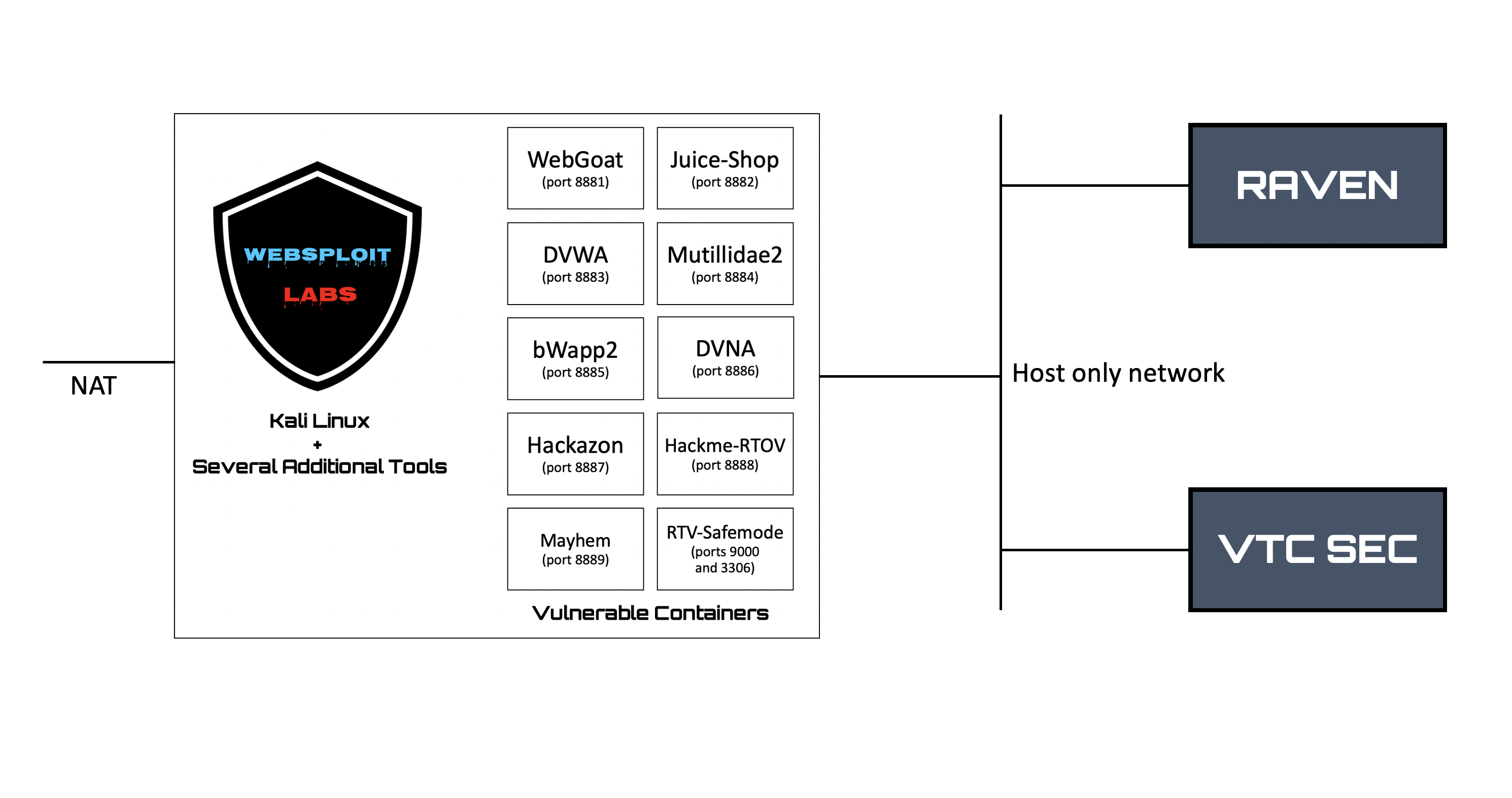
The diagram below shows the lab architecture with WebSploit Full version, Raven, and VTCSEC. The VMs were created in Virtual Box. It is highly recommended that you use Virtual Box. However, if you are familiar with different virtualization platforms, you should be able to run the VMs in VMWare Workstation Pro (Windows), VMWare Fusion (Mac), or vSphere Hypervisor (free ESXi server).
You should create a VM-only network to deploy your vulnerable VMs and perform several of the attacks using WebSploit (Kali Linux), as shown in the video above. You can configure a separate network interface in your WebSploit VM to connect to the rest of your network and subsequently the Internet. Preferably, that interface should be in NAT mode. lovely craft piston trap ios
Stay in Touch with Omar!