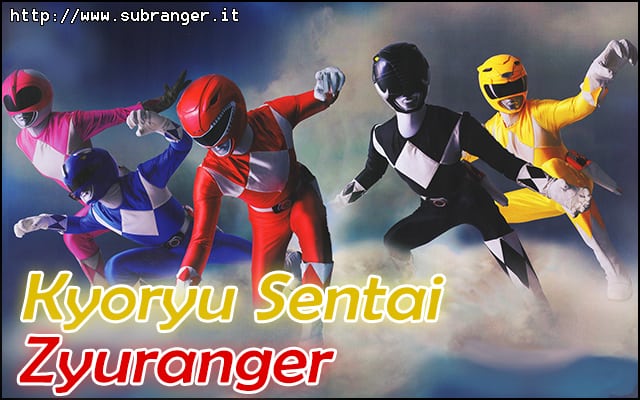
Kyoryu Sentai Zyuranger
Trama: Ai tempi della preistoria, cinque antiche tribù vivevano in armonia con i dinosauri, al punto che furono gli stessi dinosauri a scacciare via e sigillare la malvagia strega Bandora e i suoi seguaci, decisi a conquistare la Terra e tramutarla in un arido deserto. Timorosi che la strega potesse un giorno tornare, cinque guerrieri vennero scelti e poi ibernati in un sonno profondo, dal quale si sarebbero ridestati se mai la Terra fosse stata in pericolo. Dopo 10 milioni di anni esatti, Bandora si risveglia nel 1992, ed è più determinata che mai nell'attaccare il nostro pianeta, ma non ha fatto i conti con i cinque guerrieri che, forti dei poteri degli antichi dinosauri, possono trasformarsi nei Kyoryu Sentai Zyuranger! Горячий видеоконтент уже здесь – жми подробнее тут и смотри.
Torrent StreamingTelegram (Pagina aggiornata 19/10/2025)
Moreover, her work reflects contemporary anxieties about medical authority. In an era of managed care, insurance battles, and the depersonalization of treatment, the idea of a nurse who takes a personal interest in a patient—however twisted—carries a strange allure. It is the fantasy of being seen, of being attended to, even if that attention comes at the cost of autonomy. Tainton’s nurse never neglects her patient. On the contrary, she is hyper-attentive, obsessed with his every symptom and response. That intensity, however misdirected, is a form of intimacy that many real medical encounters lack. Tara Tainton’s nurse is not a character one forgets quickly. She lingers in the mind because she embodies a contradiction that is both uncomfortable and compelling: the healer as corrupter, the protector as predator. Through meticulous scripting, authentic costuming, and a performance that prioritizes psychological nuance over physical shock, Tainton has elevated the nurse scenario from a simple costume play into a exploration of power, vulnerability, and the thin line between care and control.
For many fans, there is also an element of therapeutic exploration. The nurse scenario allows viewers to engage with fantasies of surrender and control in a context that feels safe because it is so clearly fictionalized. The medical setting provides a framework of rules that are being broken, which heightens the transgressive thrill. And Tara Tainton’s performance—her ability to shift from nurturing to menacing in a single line of dialogue—ensures that the tension never fully dissipates. She is not a villain, nor is she a victim. She is an agent of chaos wrapped in the white coat of order. It is worth noting that Tainton’s nurse persona did not emerge in a vacuum. It taps into a long cultural history of medicalized control, from the sanitariums of Gothic literature to the manipulative caregivers of film noir. The figure of the nurse who heals and harms has appeared in works as diverse as One Flew Over the Cuckoo’s Nest (Nurse Ratched) and Misery (Annie Wilkes, though she is a “number one fan” rather than a nurse, the dynamic is similar). What Tainton adds to this lineage is the explicit framing of sexual control as a continuation—not a contradiction—of the caregiving role. tara tainton nurse
As the scene progresses, the uniform becomes a prop in the power exchange. She may loosen a button not out of seduction but out of “heat.” She may remove her cap, letting her hair down in a gesture that signifies a shift from professional to personal. But crucially, she never fully abandons the role. Even in the most intimate moments, she refers to him as “patient,” reminds him of his “condition,” and frames every act as part of a prescribed treatment. This linguistic consistency is what separates Tainton’s nurse from a simple roleplay. The character believes—or convincingly acts as if she believes—in the medical necessity of her actions. Why do viewers return to Tara Tainton’s nurse scenarios? The answer lies in the unique contract between performer and audience. Unlike much adult content, which promises catharsis through explicit release, Tainton’s work offers something closer to suspense. The viewer watches not just for the outcome but for the process: the subtle tilts of power, the moments of hesitation, the slow erosion of the patient’s will. It is narrative BDSM without the dungeon trappings, where the restraints are psychological and the safeword has been forgotten. Tainton’s nurse never neglects her patient